BetWinner Zambia: licence evidence and risk checks
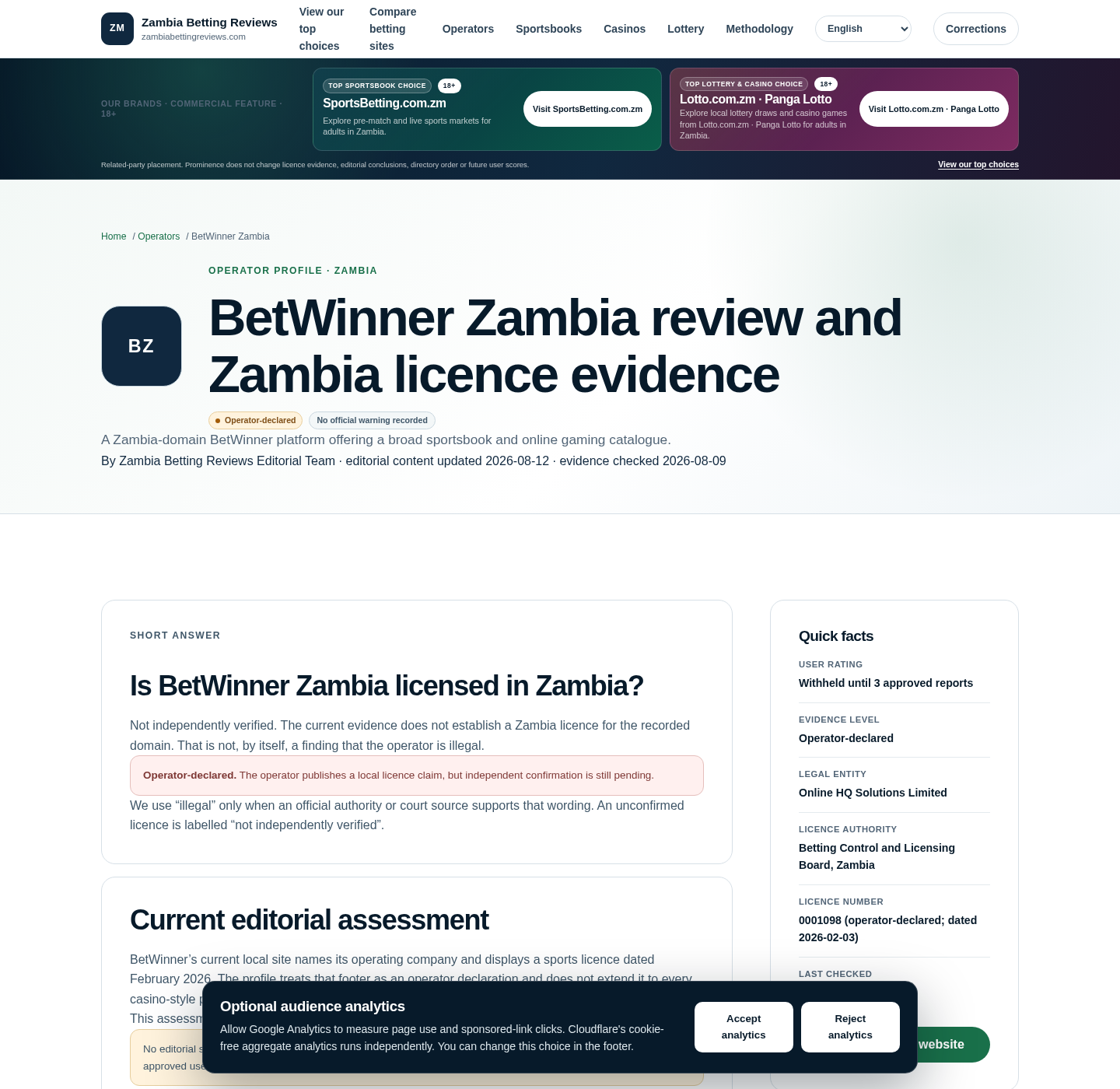
The available records do not establish a complete match between BetWinner, a specific internet domain, Online HQ Solutions Limited and a current Zambian bookmaker licence. The service declares licence number 0001098, but the supplied packet contains no primary register entry confirming that number, its holder, its validity period or an authorised internet address. The exact domain is also unspecified.
That leaves the assessment amber. It is not proof that the service is fraudulent or illegal, but it is also not enough to call it licensed and verified for Zambia. Anyone considering an account should resolve the domain and licence gaps before depositing, then use conservative payment controls.

Decision summary: what the records support
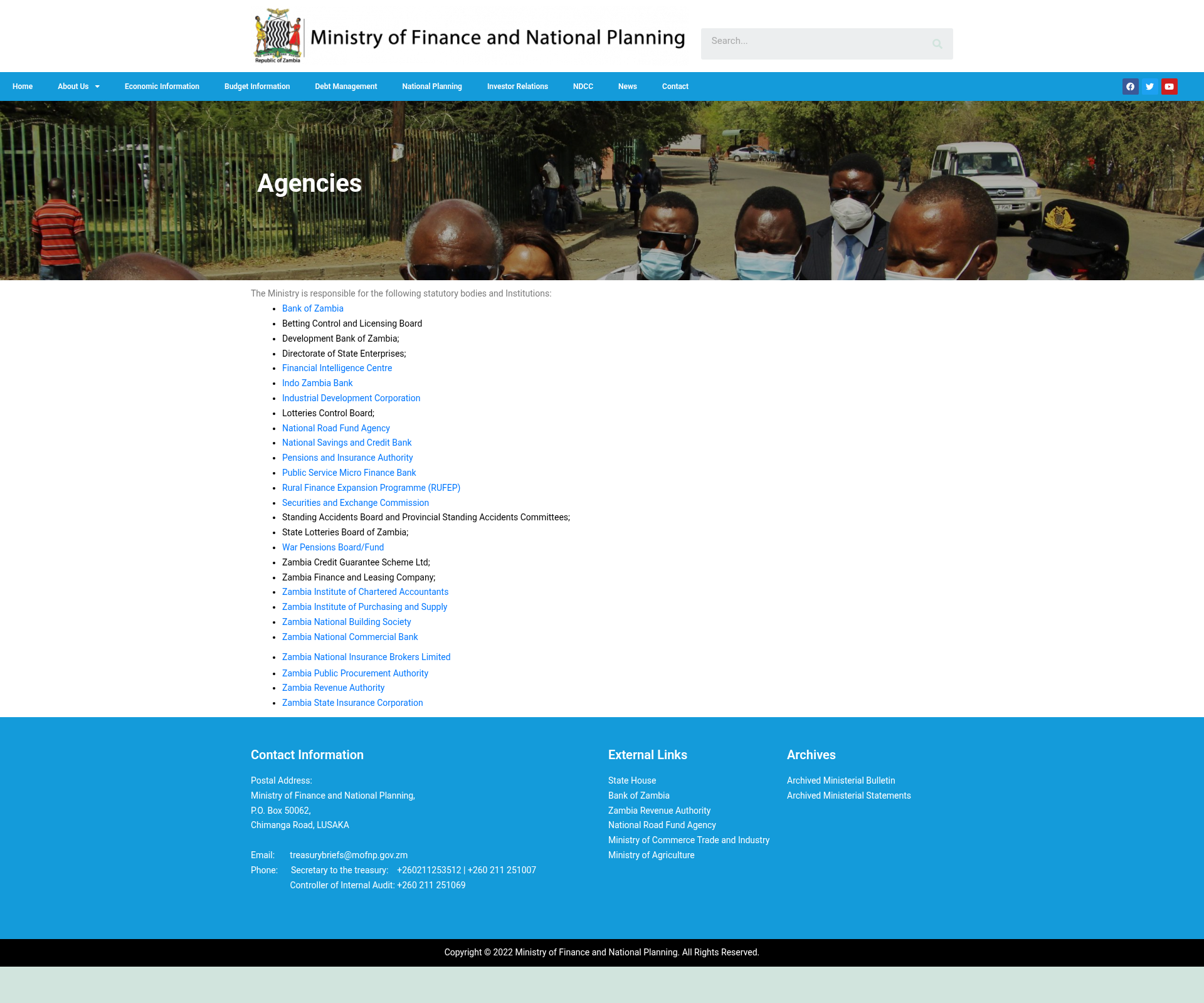
The strongest supplied material describes Zambia’s regulatory structure rather than this operator. The Ministry of Finance and National Planning lists the Betting Control and Licensing Board and Lotteries Control Board among its agencies. The Betting Control Act establishes a Board and a bookmaker-licensing framework. A separate ministry resource publishes casino-licensing applications, guidance and a checklist, although it is not a current register linking betting domains to licensed entities.
| Question | Finding | Practical meaning |
|---|---|---|
| Is there a Zambian licensing framework? | Yes, primary records identify a Board and bookmaker licensing framework. | Bookmaking is regulated; a service-specific check is still necessary. |
| Is Online HQ Solutions Limited confirmed in the supplied primary records? | No. | The declared company cannot be matched to a current Zambian record from this packet. |
| Is licence 0001098 verified? | No; it is operator-declared only. | Do not treat the number alone as proof of authorisation. |
| Is an exact authorised domain confirmed? | No exact domain was supplied. | A domain-level legitimacy conclusion remains open. |
| Is fraud established? | No. | Missing verification is a risk signal, not proof of a scam. |
The distinction matters. A legal framework can confirm who regulates an activity without confirming that every service claiming a number belongs within that framework. Likewise, an operator statement can be a useful lead, but it does not replace a dated primary record connecting the company, licence and precise internet address.
Zambia’s primary regulatory evidence
The Ministry agency listing identifies the Betting Control and Licensing Board and Lotteries Control Board among the Ministry’s agencies. This supports the existence and institutional placement of the relevant bodies, but the supplied record does not show a current list of approved betting websites.
The Betting Control Act establishes a Board and provides a bookmaker-licensing framework. It is important legal context because it shows that a bookmaker licence is not merely a marketing label. However, the Act is not a live register and does not connect licence 0001098 to Online HQ Solutions Limited or to a particular domain.
The casino-licensing guidance and checklist demonstrate another official licensing resource. Its relevance is limited: casino application guidance is not proof of a current bookmaker authorisation, and the page is not a domain register. It should not be stretched into an endorsement of this service.
| Primary record | What it supports | What it does not support |
|---|---|---|
| Ministry agency listing | Relevant boards are listed among government agencies. | Current approval of the service, company, licence number or domain. |
| Betting Control Act | A Board and bookmaker-licensing framework exist. | A live licence status or authorised-domain match. |
| Casino guidance resource | Official application guidance and a checklist are published. | A current bookmaker register or endorsement of an internet service. |
For a green conclusion, a current competent-source record would need to connect the precise domain to the declared legal entity and licence. That link is absent, so the primary evidence supports regulatory context but not service-specific authorisation.
Operator, licence and domain match
The service identifies Online HQ Solutions Limited and declares licence 0001098. Those details should be treated as claims awaiting confirmation because no supplied primary record reproduces the pairing. There is also no expiry date, issue date, licence class, registered address or regulator name tied to the declared number in the accepted evidence.
The missing exact domain is especially significant. A company and licence can only help a consumer identify a legitimate service when the internet address is also confirmed. Similar-looking addresses may be unrelated, cloned or operated under different terms. A brand name displayed on a screen is not enough to establish control of the address.
| Match element | Supplied value | Verification status | Check before payment |
|---|---|---|---|
| Trading name | BetWinner | Identified, not independently authorised by the packet | Compare spelling across the address, account terms and payment descriptor. |
| Legal entity | Online HQ Solutions Limited | Operator-declared | Seek confirmation from a competent current register or regulator response. |
| Licence | 0001098 | Operator-declared | Confirm holder, class, status and validity dates. |
| Exact domain | Not supplied | Unknown | Do not assume that any search result or advertisement is the authorised address. |
| Licence expiry | Not supplied | Unknown | Request a current status rather than relying on an undated number. |
A sound match requires all four core elements—trading identity, legal entity, licence and domain—to point to one another. If the cashier names a different company, the terms identify another entity, or support cannot explain the licence jurisdiction, pause. Guidance on conducting the same check is available under licence checks and legal status in Zambia.
Scam or legitimate, and legal or not
The evidence does not justify either extreme label. Calling the operation legitimate and licensed in Zambia would overstate the records because the current licence and domain match is missing. Calling it a scam would also overstate the records because no official adverse finding or corroborated documented fraud evidence was supplied.
Amber means unresolved evidence. It signals that a consumer must verify more before exposing money or identity documents. It is not a compromise score based on popularity, design quality or advertising visibility. Those features cannot establish legal status.
The dated third-party item is discovery context only. It indicates that the name has been discussed by a review publisher, but it does not prove licensing, safety, payment performance or the truth of any complaint. It must not be substituted for the Ministry, legislation or a direct response from a competent authority.
The practical legal question is therefore unanswered for the precise service address. Before using it, obtain a domain-specific confirmation rather than asking whether the name is generally known. If confirmation cannot be obtained, the safer decision is not to deposit. Consumers comparing services can consult the operator review directory, but every alternative still needs its own evidence check.
Payments, withdrawals and KYC controls
No accepted record identifies supported Zambian payment methods, deposit limits, withdrawal times, fees, exchange-rate treatment or account-verification rules. There is also no documented withdrawal test. Claims about instant payouts, mobile-money support or typical processing times would therefore be speculative.
Before depositing, capture the cashier terms visible inside the same verified domain and note the payment recipient. Check whether the recipient’s legal name corresponds with the declared operator. A different descriptor is not automatically wrongdoing, but it requires a clear explanation before funds are sent.
| Control point | Minimum check | Stop signal |
|---|---|---|
| Deposit recipient | Record the legal name and payment descriptor before approval. | Unexplained recipient or a request to pay a private individual. |
| Withdrawal rules | Read minimum, maximum, fee and turnover conditions. | Important conditions appear only after depositing. |
| Identity checks | Confirm required documents and the stated handling process. | Requests arrive through an unrelated address or informal messaging account. |
| Currency | Confirm whether the account, deposit and withdrawal use ZMW or another currency. | Unclear conversion rate or unexplained currency change. |
| Test amount | If proceeding after verification, use an amount affordable to lose and test withdrawal early. | Pressure to increase deposits before a small withdrawal is processed. |
KYC can be part of regulated account controls, but the mere request for identification does not prove regulation. Upload documents only through a verified address and only after confirming why they are needed. Mask information that is not required where the process permits, retain submission records and never share passwords, one-time codes or full card security credentials.
A small deposit is not a licence test. It only limits exposure. Even a successful small withdrawal does not prove future withdrawals will work or establish legality. Use the payment-checking guide to record terms, timestamps, amounts and transaction references consistently.
Complaint route and record keeping
No service-specific complaint process is verified in the packet. Before opening an account, locate the terms and identify the legal entity, support channel, escalation stages and response periods. If those details are absent or conflict with the cashier identity, treat the gap as material.
For an account dispute, first preserve evidence: the exact domain, account identifier, transaction references, dates, amounts, displayed terms, correspondence and any reason given for a restriction. Describe what happened without alleging criminal conduct that has not been established. Ask for a written final response and a precise explanation of any term relied upon.
If internal support does not resolve the matter, follow the complaint guidance. A regulator enquiry should identify the domain and declared company, not only the trading name. Ask whether licence 0001098 is current, which entity holds it, what activities it covers and whether the domain is authorised. The primary records supplied here establish regulatory context, but they do not establish where an individual dispute will be accepted or how it will be decided.
Payment-provider contact may also be appropriate where a transaction is unauthorised, duplicated or misdescribed. Do not make a chargeback claim merely because a bet lost. Give the provider accurate records and follow its deadlines. Anyone experiencing pressure, loss of control or harmful gambling should stop deposits and use responsible gambling support or urgent help.
Clone and impersonation checks
Because the authorised domain is unknown, clone risk cannot be resolved by comparing an address with an official entry. Consumers should avoid links from unsolicited messages, social-media replies and search advertisements until the destination has been independently confirmed.
Inspect the complete address rather than the page design. Look for substituted letters, added words, unusual subdomains and redirects to a different address. Encryption protects data in transit; a padlock does not prove that the recipient is licensed or connected to Online HQ Solutions Limited.
Compare the legal name in the terms, privacy notice, cashier and payment receipt. Check whether support consistently identifies the same entity and licence. A copied logo, polished interface or familiar colour scheme can be reproduced and should not carry evidential weight. The supplied logo is included only to identify the name under assessment, not to authenticate any website.
High-risk signs include demands for payment to an individual, requests for remote device access, pressure to reveal a one-time code, or a claim that an additional deposit is required solely to release an existing balance. Preserve records and consult the scam warning guide rather than continuing a pressured transaction.
Evidence chronology, unknowns and method
All four supplied records were checked on 22 August 2026. Three are primary sources addressing institutions, legislation or licensing guidance. One is third-party context and carries no regulatory weight. No accepted source provides a current service-domain register entry.
| Date checked | Record | Evidential role | Result for the decision |
|---|---|---|---|
| 22 August 2026 | Ministry agency listing | Primary institutional evidence | Confirms listed regulatory bodies, not this service. |
| 22 August 2026 | Betting Control Act | Primary legal evidence | Confirms a licensing framework, not a current licence match. |
| 22 August 2026 | Casino guidance resource | Primary administrative context | Confirms guidance exists, not bookmaker approval. |
| 22 August 2026 | Third-party review context | Discovery context | Adds visibility only; proves no licensing or complaint claim. |
The method separates primary records, operator declarations and third-party context. A green signal requires current primary evidence matching the exact domain and entity. Red requires an official adverse record or corroborated documented adverse evidence. With neither threshold met, amber is the appropriate result.
Material unknowns include the exact domain, licence issuer, licence class, issue and expiry dates, current status, authorised activities, approved payment methods, withdrawal performance, KYC procedure and complaint escalation route. These are not filled with assumptions. The detailed standard is available under methodology.
Corrections should be supported by a dated primary record or a verifiable document identifying the exact domain and entity. Send a concise correction request through contact, stating which claim should change and why. Operator statements may clarify a lead, but a regulatory conclusion will change only when evidence of suitable authority and specificity is available.
A cautious consumer decision
The current packet supports only a conditional decision. Zambia has a bookmaker-licensing framework and identifiable regulatory bodies, yet the declared operator, number 0001098 and an exact internet address are not joined by current primary evidence. Payment performance and verification practices are also undocumented.
Consumers who cannot obtain a domain-specific confirmation should avoid depositing. Those who independently resolve the licence match should still read the payment and withdrawal terms, verify the recipient, limit the first transaction and retain records. No deposit should be treated as affordable if losing it would affect essential expenses.
The single commercial route is available only for readers who have completed those checks and accept the unresolved risks: Compare evidence. Its presence does not alter the amber finding or supply missing evidence.
Frequently asked questions
Is BetWinner licensed in Zambia?
The supplied primary records show that Zambia has relevant regulatory bodies and a bookmaker-licensing framework, but they do not connect BetWinner, Online HQ Solutions Limited, licence 0001098 and an exact domain. The licence claim therefore remains unverified for the service under review.
Is BetWinner a scam?
No supplied official adverse record or corroborated documented evidence establishes fraud. However, the missing domain and licence match prevents a positive legitimacy conclusion. Amber means unresolved verification, not proof of either safety or a scam.
What does licence 0001098 prove?
On the accepted evidence, it proves only that the service declares that number. There is no supplied primary entry confirming the holder, regulator, licence class, validity dates or authorised domain. The number should be verified before it influences a deposit decision.
Are payments and withdrawals reliable?
That cannot be determined from the packet. No payment-method record, fee schedule, processing-time evidence or documented withdrawal test was supplied. Check the cashier recipient and written withdrawal rules, then limit exposure if all other verification is completed.
What documents may be requested for KYC?
The supplied records do not state the service’s KYC requirements. Confirm the required documents and handling process on a verified domain before uploading anything. Never send passwords, one-time codes or complete card security credentials.
Where should a complaint be taken?
Start with the service’s documented support process and request a written final response. Preserve the exact domain, transactions, terms and correspondence. If escalation is needed, ask the competent authority to confirm the declared licence and domain, and use the complaint guide for an evidence-focused record.