Melbet Zambia review: licence evidence and risks
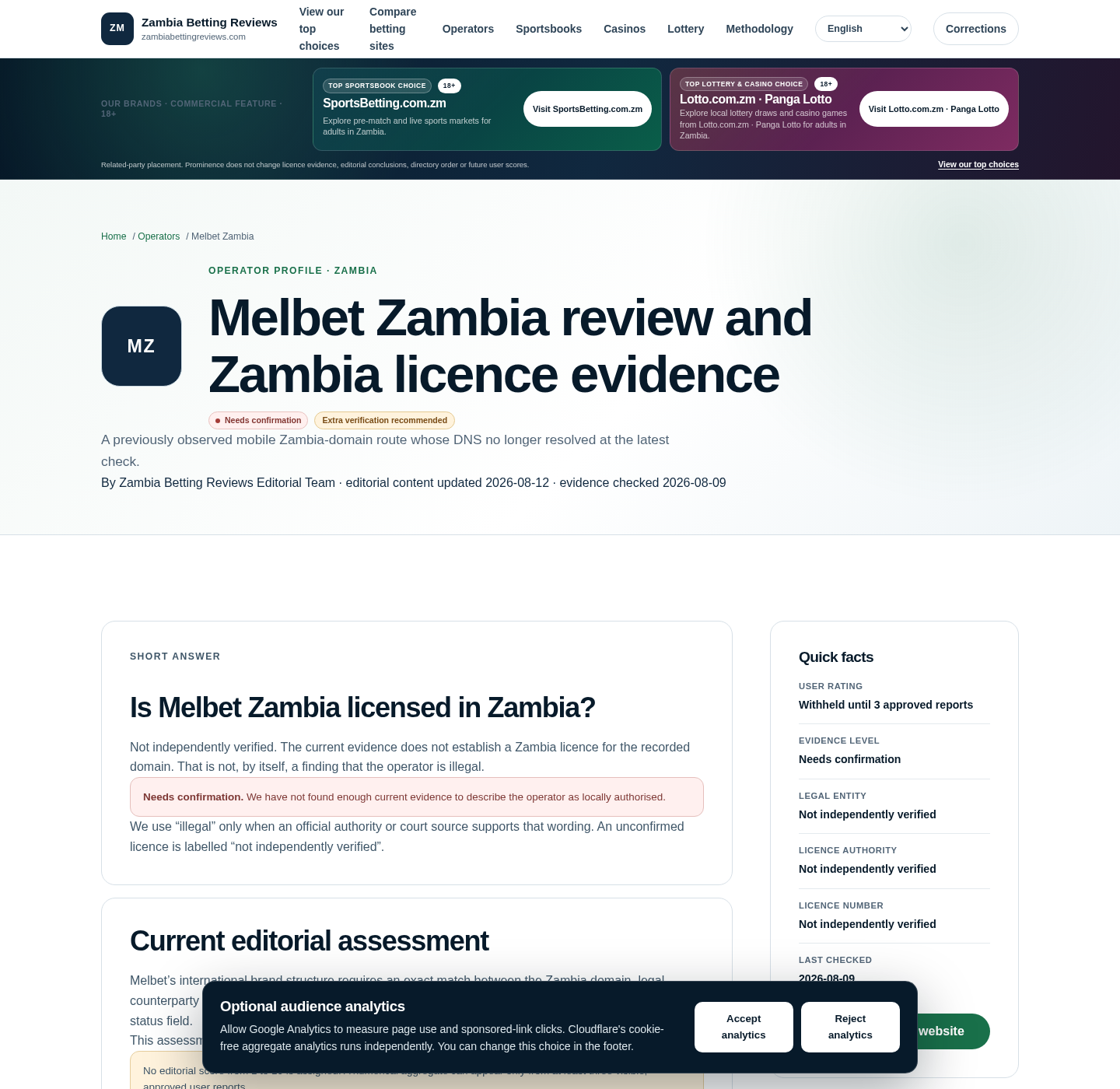
The current evidence supports an amber, not green, assessment. Zambia has a statutory bookmaker-licensing framework and named public bodies, but the verified packet does not contain a current official register entry connecting Melbet, a precise internet address, a legal operator and a Zambian licence. It therefore cannot establish that the service is licensed locally, legal for a particular transaction, safe, or fraudulent.
No exact official internet address was supplied. The operator and licence are also not independently confirmed. Those gaps matter because a familiar name, promotional page or accessible sign-in screen does not establish who receives deposits or which authority supervises the service.

Verdict boundary: what can and cannot be established
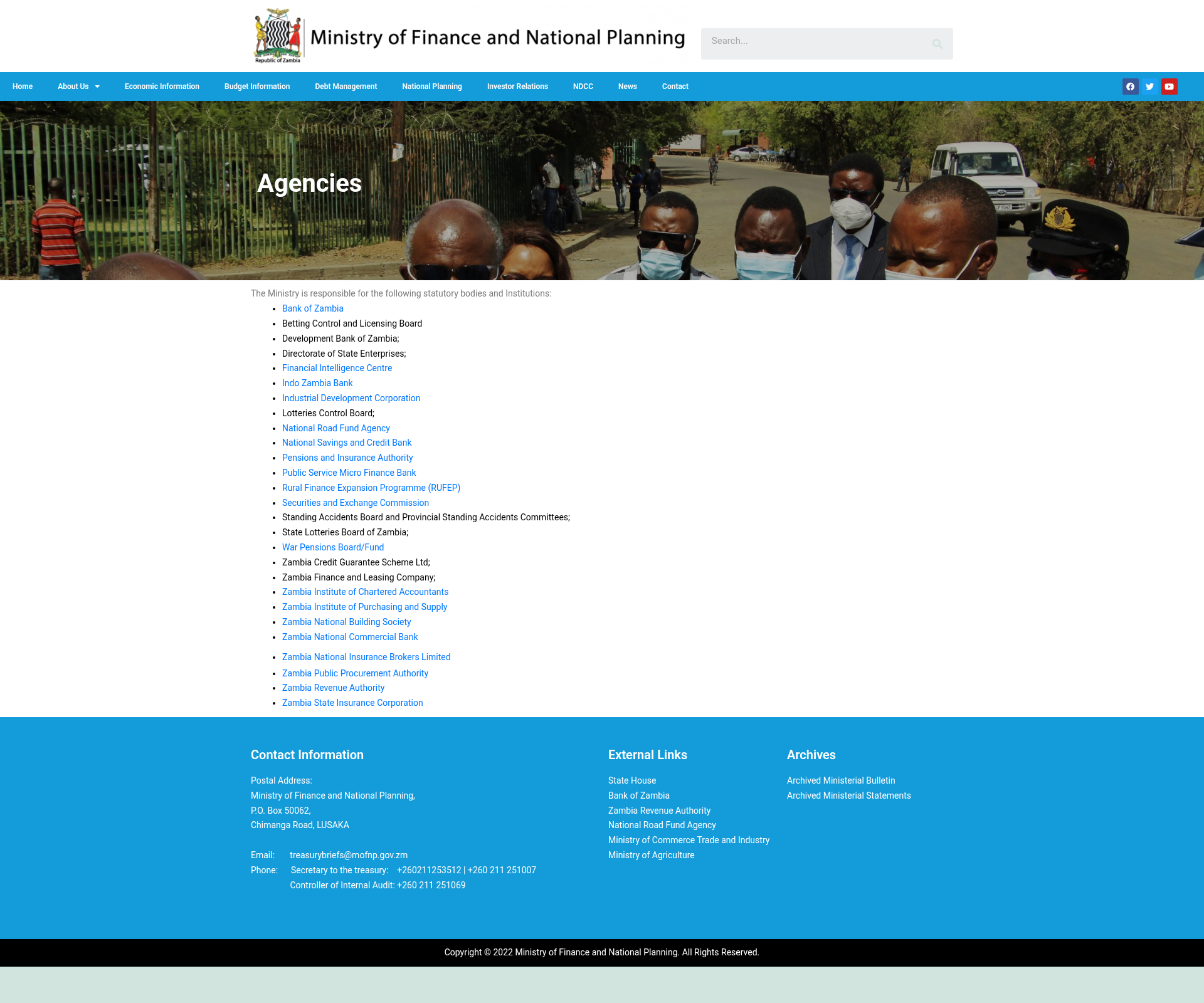
The available primary records establish the regulatory setting, not a positive match for the reviewed service. The Ministry of Finance and National Planning identifies the Betting Control and Licensing Board and Lotteries Control Board among its agencies. The Betting Control Act establishes a Board and a bookmaker-licensing framework. A separate ministry resource publishes casino-licensing applications, guidance and an online checklist. None of the supplied records is a current register row naming this service, its operator and its exact internet address together.
| Question | Evidence-bound answer | Confidence |
|---|---|---|
| Is there a Zambian betting-licensing framework? | Yes. Primary records identify the relevant structure and legislation. | Supported |
| Is the reviewed service confirmed on a current official register? | No matching register row was supplied. | Unresolved |
| Is a precise official internet address confirmed? | No exact address was supplied. | Unresolved |
| Is the legal operator confirmed? | No. | Unresolved |
| Is the service proven to be a scam? | No official adverse record or corroborated documented evidence was supplied. | Not established |
Amber means verification remains open. It is not a softer word for safe, and it is not an accusation of wrongdoing. A green assessment would require current primary evidence matching the exact address, legal entity and licence. A red assessment would require an official adverse record or corroborated documented evidence. Neither threshold is met.
The missing register match
The decisive missing item is an exact register match. A useful official record should identify the licence holder, licence type or number, current status and, where internet operations are authorised, the relevant address or trading identity. The packet contains no such row for Melbet.
The Ministry agency listing supports only the institutional point: the Betting Control and Licensing Board and Lotteries Control Board are listed among ministry agencies. It does not identify the reviewed service as licensed.
The Betting Control Act establishes the Board and bookmaker-licensing framework, but the supplied Act does not provide a live list of approved internet addresses. The casino-licensing guidance and checklist explains an application process but likewise is not a current operator register. These sources cannot be combined to manufacture a licence match that none contains.
A certificate image, licence number or company name displayed by a gambling service would still need comparison with a current competent-source record. Differences in spelling, corporate suffix, address, licence class, status or expiry date should be resolved before depositing.
Legal in Zambia, legitimate, or a scam?
These are separate questions. “Legal in Zambia” depends on applicable law, authorisation and the facts of the activity. “Legitimate” can refer to identity, ownership and operational conduct. “Scam” alleges deception and needs reliable supporting evidence. The packet settles none of those questions for this service.
| Claim encountered | What it actually proves | What remains necessary |
|---|---|---|
| The service can be opened from Zambia | Only that access was possible at that moment | Regulatory and entity verification |
| A page displays a licence badge | Only that the page makes a claim | Confirmation in a current official record |
| A third party calls it licensed | The third party made that statement | Primary evidence matching entity and address |
| A user reports a payment problem | An individual report exists | Records, response and independent corroboration |
| No warning appears in this packet | No warning was supplied here | A current official status check |
The responsible answer is therefore narrow: local licensing is not independently confirmed, and fraud is not established. Readers seeking the legal framework can use the internal Zambia legality guide and licence-check procedure. Those resources should inform verification, not substitute for an official record.
The empty exact-address field creates an additional identity risk. Without a confirmed address, it is impossible to distinguish an intended service from a lookalike solely by name. Do not treat search ranking, spelling familiarity, social-media promotion or a saved advert as proof of identity.
Payments, withdrawals and identity checks
The packet supplies no verified list of deposit methods, withdrawal methods, currencies, fees, limits or processing times. It also contains no completed deposit or withdrawal test. Any precise claim about mobile money, cards, bank transfers, electronic wallets, minimum deposits or same-day payouts would therefore be invented.
| Payment issue | Verified position | Practical check before payment |
|---|---|---|
| Available deposit methods | Unknown | Read the cashier terms before sending funds |
| Withdrawal channels | Unknown | Confirm whether withdrawal must return to the deposit method |
| Fees and exchange costs | Unknown | Record the displayed amount, currency and fee |
| Minimum and maximum limits | Unknown | Capture the limits shown for the account |
| Processing time | Unknown | Separate internal review time from provider settlement time |
| Successful withdrawal test | None supplied | Avoid treating promotional speed claims as tested results |
A cautious user should check the recipient name before authorising payment. If the payee differs from the expected legal entity, pause and request a clear explanation. Keep the transaction reference, amount, date, displayed terms and correspondence. The payment-check guide provides a structured pre-payment checklist.
Identity verification, often abbreviated KYC, is also undocumented in the packet. There is no supported account of which documents are requested, when checks occur, how long review takes or how personal data is handled. Before depositing, inspect the current verification and privacy terms. Consider whether the requested documents are proportionate and whether a verifiable legal entity explains who controls the data.
Do not assume that a successful deposit predicts a successful withdrawal. Deposits can be automated while withdrawals may involve identity, payment-source, bonus or risk checks. A small initial transaction can limit exposure, but it cannot prove future withdrawals will succeed.
Checking for clones and wrong addresses
Because no exact official address is confirmed, clone screening is central rather than optional. Start from a competent regulator record, not an advertisement or unsolicited message. Compare the full address character by character, including spelling, punctuation and the ending after the final dot. A padlock only indicates an encrypted connection; it does not prove licensing or honest ownership.
- Find a current official record naming the licence holder and relevant trading identity.
- Confirm whether that record identifies an authorised internet address.
- Compare the legal entity in the terms, cashier and privacy notice.
- Check that customer-support addresses use an expected address rather than a lookalike.
- Reject requests to pay a personal account, reveal a password, install remote-access software or send a one-time code.
- Preserve screenshots and transaction references if something does not match.
Common warning signs include extra words in the address, substituted letters, unusual subdomains, copied branding, pressure to deposit immediately and payment instructions moved into private messaging. None proves that the reviewed service itself is fraudulent, but each justifies stopping the transaction and checking independently. More defensive checks appear in scam warnings.
Complaints and preserving evidence
No verified complaint outcome is included. The third-party source is contextual only, so it cannot establish that any allegation is true or false. If a dispute arises, begin with a concise written complaint to the service and request a reference number. State the account identifier, transaction reference, amount, date, expected outcome and requested remedy. Do not send passwords or one-time codes.
Keep copies of the terms that applied when the transaction occurred, identity-check requests, cashier records and all replies. Record dates in chronological order. If the service changes its explanation, retain both versions. A bank or payment provider may have separate dispute deadlines, so contact it promptly where an unauthorised or misdirected payment is suspected.
Escalation to a public body should identify the legal entity and exact address involved. The ministry agency listing helps identify the regulatory structure but does not prove that a particular complaint falls within one body's jurisdiction. Use the complaints guide to organise a case file. Immediate threats, coercion, account compromise or suspected identity theft may require urgent contact with the relevant payment provider or public authority.
A complaint narrative alone should not be converted into a factual verdict. Useful corroboration can include dated transaction records, consistent correspondence, a final decision or an official notice. Publicly sharing identity documents or full account numbers can create further harm; redact sensitive details.
Evidence chronology and source roles
All four records were checked on 22 August 2026. Their roles must remain distinct. Primary records describe institutions, legislation and application guidance. The third-party item offers discovery context only.
| Date checked | Record | Role in the assessment | Limitation |
|---|---|---|---|
| 22 August 2026 | ZM-SRC-001 | Identifies named ministry agencies | No service-specific register match |
| 22 August 2026 | ZM-SRC-002 | Establishes a Board and bookmaker-licensing framework | No current internet-address register |
| 22 August 2026 | ZM-SRC-005 | Shows casino application guidance and checklist | Not a current operator register |
| 22 August 2026 | ZM-SRC-050 | Provides dated discovery context | Cannot prove licensing, legality, safety or complaint truth |
The chronology does not mean that all records have equal evidential weight. Legislation can establish a framework without proving that a named business currently holds permission. Application guidance can show how licensing works without confirming an application, approval or active status. A third-party listing can point researchers towards a name while remaining unsuitable for a licensing verdict.
There is no supplied licence number, expiry date, legal-entity confirmation, authorised-address record, regulator decision, adverse official notice, payment-method confirmation or withdrawal test. Each remains an open evidence item.
Method and correction path
The assessment uses a match test: exact address + legal entity + current licence + competent primary source. A positive result requires all relevant elements to refer to the same operation. Name similarity alone is insufficient. Where primary evidence confirms only the general framework, the result stays amber.
The method also separates claims by source type. Operator statements may describe terms but cannot independently validate their own licensing status. User reports may identify issues worth investigating but remain allegations unless supported. Primary records carry the greatest weight for legal status, although their date, scope and precision still matter. The full standard is available in the editorial methodology.
A correction can be considered if a dated, accessible record is provided that identifies the exact internet address, legal licence holder, licence number or class, current status and competent issuing body. Useful corrections may also document changed payment terms, a final complaint outcome or an official warning. Promotional text, undated screenshots and copied licence badges are not enough by themselves.
Submit a correction through contact with the source identifier, publication date and precise statement challenged. Sensitive personal documents should not be sent unless a secure, necessary process has been confirmed. The assessment should move to green only after a current primary match, or to red only after qualifying adverse evidence.
Decision guide before using the service
The present record supports caution. A person considering registration should first obtain the exact address from a current official source, identify the legal operator in the terms and verify the licence directly. Payment terms, withdrawal rules, identity requirements and complaint contacts should be read before funds are sent.
| If you find… | Sensible response |
|---|---|
| A current official match for address, entity and licence | Confirm status and scope, then assess payment and consumer risks separately |
| A licence claim without a matching official record | Pause and request verifiable details |
| Different company names across terms and cashier | Do not pay until the relationship is explained |
| Pressure, private payment instructions or requests for codes | Stop contact and secure the payment account |
| Gambling is causing financial or emotional harm | Do not deposit; use responsible gambling support |
No review can remove gambling risk. Licensing, if later confirmed, would not guarantee winnings, instant withdrawals or resolution of every dispute. Set a firm spending limit, never borrow to gamble and avoid chasing losses. Anyone needing immediate support can use urgent help.
For readers who have completed the checks and independently accept the unresolved status, the single commercial route is Continue comparison. It should not be interpreted as proof of a licence or recommendation to deposit.
Frequently asked questions
Is Melbet licensed in Zambia?
Not independently confirmed. The supplied primary records establish Zambia's licensing framework and identify relevant public bodies, but no current official record was supplied that matches the service, a precise internet address, a legal operator and a Zambian licence.
Is Melbet legal in Zambia?
The evidence packet does not establish a service-specific legal conclusion. Accessibility, advertising or a third-party listing does not prove local authorisation. Verify the exact address and legal entity against a current competent-source record before transacting.
Is Melbet a scam?
That is not established. No official adverse record or corroborated documented evidence was supplied. The amber signal reflects unresolved identity and licensing evidence, not a finding of fraud or safety.
Which payment and withdrawal methods are verified?
None are verified by the supplied records. There is no supported list of methods, currencies, fees, limits or processing times, and no withdrawal test. Check current cashier terms and the recipient identity before paying.
What identity documents are required?
The packet does not document the service's KYC requirements. Check when verification occurs, which documents are requested, who controls the data and whether withdrawal restrictions apply before submitting personal information.
How should I report a dispute or correction?
Keep transaction records, applicable terms, correspondence and dates. Complain to the service in writing and request a reference number, then use the relevant payment-provider or public-body route where appropriate. Send evidence-based editorial corrections through the contact route.